Vector insects exploit the heavy canopy and creek-fed microclimates common throughout Wake County. In older neighborhoods like Historic Oakwood, Mordecai, and Boylan Heights, dense mature hardwood canopies create…
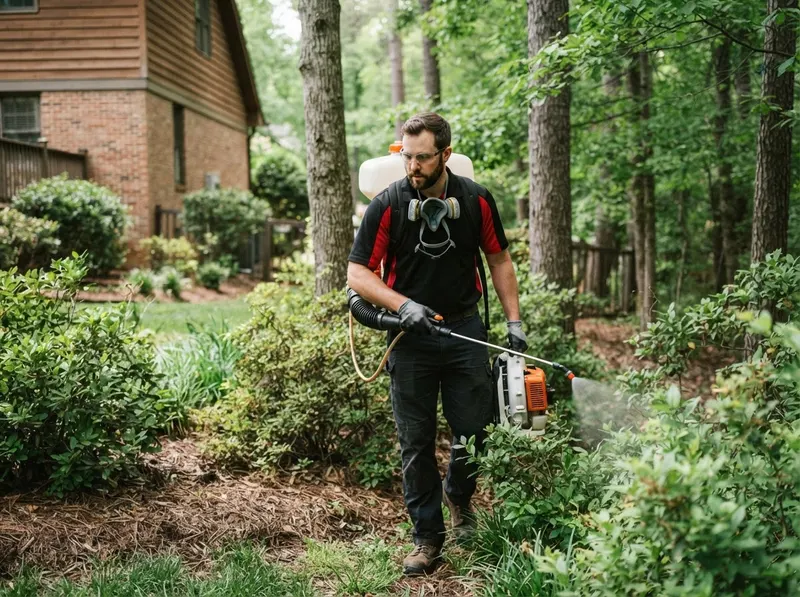
Vector insects exploit the heavy canopy and creek-fed microclimates common throughout Wake County. In older neighborhoods like Historic Oakwood, Mordecai, and Boylan Heights, dense mature hardwood canopies create shaded pockets where ambient humidity hovers above 70%, shielding mosquitoes from midday heat. In North Hills, Five Points, and the Village District, lush ornamental groundcovers like English ivy and pachysandra shelter adult ticks close to turf edges. In newer developments near Brier Creek, Wakefield, and Hedingham, poor subsoil grading and clay retention basins trap stagnant water. Effective abatement treats these biological harborage zones: micro-droplet misting targets the undersides of broadleaf shrubs where female mosquitoes rest between blood meals, while granular insect growth regulators stop larvae development in un-drainable collection basins.
Mist-blowing entire open lawns wastes active ingredients because mosquitoes avoid direct sun and low-cut grass; instead, defensive barriers focus on property margins, fence lines, and transitional ecotones where lawn meets naturalized timber. Tick abatement isolates the transition zone where pine straw, fallen oak leaves, and brush piles meet turf. Applying targeted bifenthrin or essential plant oil compounds to this 10-foot perimeter prevents tick nymphs from latching onto pets and humans. Residual applications maintain integrity for 21 to 30 days under normal Piedmont summer rainfall, though heavy tropical storm runoffs require supplemental perimeter re-fortification to prevent repopulation from adjacent greenways.
Every job gets a firm, written price after a free on-site visit.
Tell us about your exterior mosquito and tick yard abatement job in Raleigh and we'll send a clear, written quote, usually the same day.
 Carolina Fox Pest Control