Rodent activity in attic and crawlspace cavities leaves behind more than fragmented insulation batts. Mice, grey squirrels, flying squirrels, and raccoons compress fiberglass through repeated travel runs, stripping the…
Rodent activity in attic and crawlspace cavities leaves behind more than fragmented insulation batts. Mice, grey squirrels, flying squirrels, and raccoons compress fiberglass through repeated travel runs, stripping the material of its rated thermal boundary while depositing pheromones, urine, and solid waste. In Raleigh neighborhoods with dense hardwood canopies such as Five Points, Mordecai, and Oakwood, roof-line ingress along fascia intersections and ridge vents allows tree-dwelling wildlife immediate access to R-30 or R-38 attic assemblies. In the humid crawlspaces common to older foundations in Boylan Heights and Cameron Village (Village District), Norway rats and mice breach rusted foundation vent screens to burrow underneath loose-laid 6-mil poly vapor barriers, nesting directly against subflooring and rim joists.
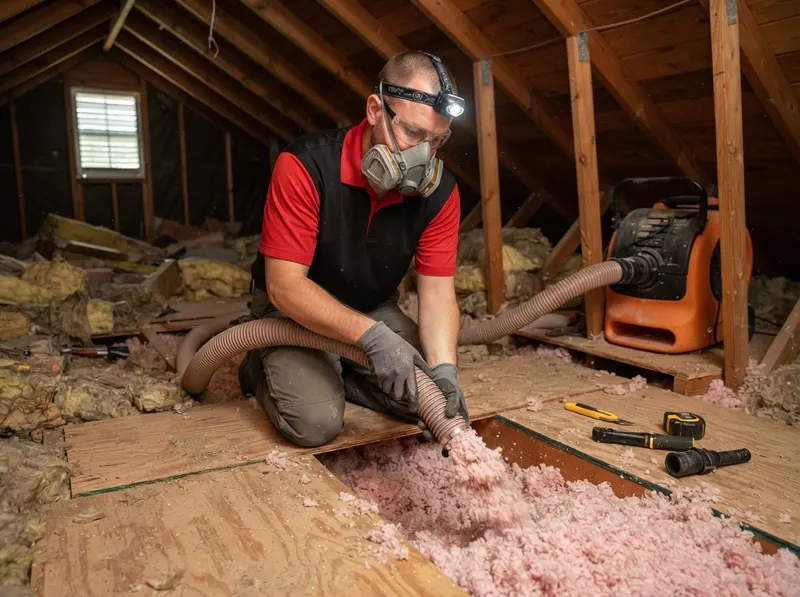
Restoration differs fundamentally from simply rolling new insulation over old material. Capping soiled fiberglass traps pathogen-bearing dander and rodent feces beneath the fresh layer while leaving pheromone scent trails intact, which actively draws outside rodents back into the envelope. Complete restoration follows an objective biological elimination sequence: 1. Negative-pressure HEPA extraction removes loose-fill cellulose or batts directly into outside collection containment without releasing particulates into living areas. 2. Field technicians hand-vacuum fecal pellets, mist a twin-chain quaternary ammonium virucide across framing members to neutralize zoonotic bacteria, and deodorize contaminated wood. 3. Physical exclusion repairs seal soffit voids, gable vents, plumbing penetrations, and rim-joist gaps using 24-gauge galvanized 1/4-inch steel hardware cloth and expanding structural metal foam. 4. Fresh, pest-resistant borate-treated cellulose or fiberglass restores the floor or roof-deck to current North Carolina Energy Conservation Code standards.
The trade-off between targeted partial restoration and whole-home insulation replacement centers on biological contamination spread. When squirrel damage is isolated to a single 150-square-foot roof corner in North Hills or Wakefield, vacuuming the damaged quadrant, sanitizing framing, and patching insulation prevents the expenditure of a whole-home replacement. Conversely, distributed rodent droppings or active rat runs throughout an entire attic or crawlspace require complete evacuation of the thermal envelope; leaving localized reservoirs of urine-soaked fiberglass maintains ammonia vapors that seep into HVAC supply registers during temperature shifts.
Every job gets a firm, written price after a free on-site visit.
Tell us about your attic and crawlspace insulation restoration job in Raleigh and we'll send a clear, written quote, usually the same day.
 Carolina Fox Pest Control